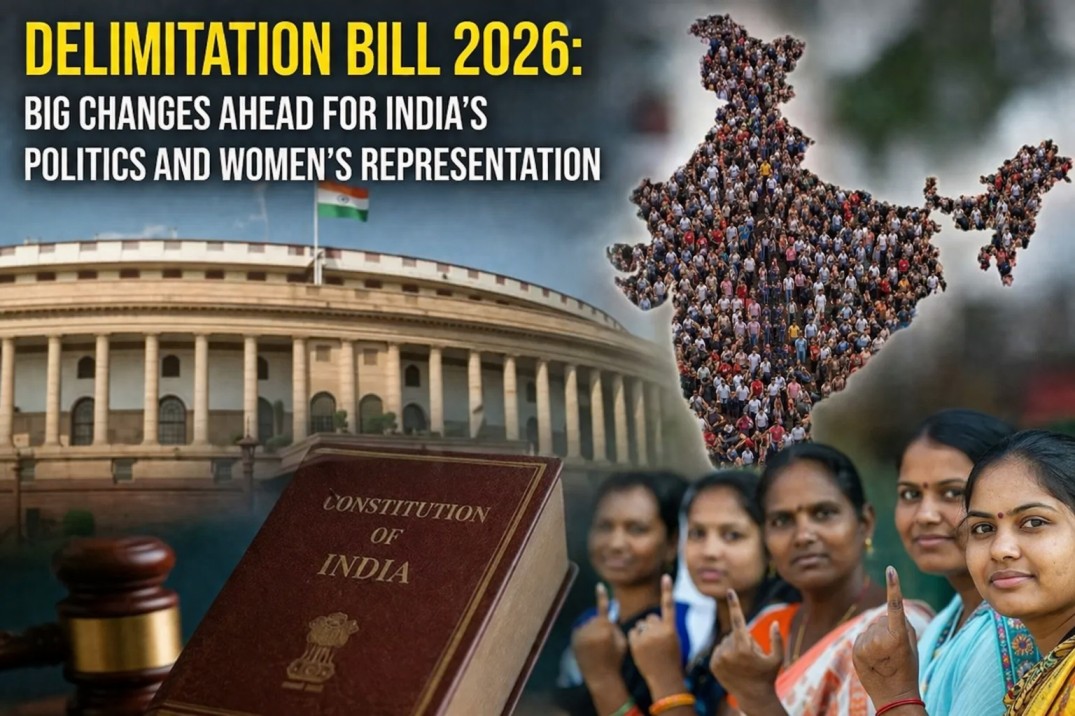
India has entered one of its biggest political reform debates in recent years. The Delimitation Bill 2026, along with the Women’s Reservation Bill implementation package, has triggered intense discussion inside Parliament of India and across the country. Supporters call it historic. Critics call it politically sensitive.
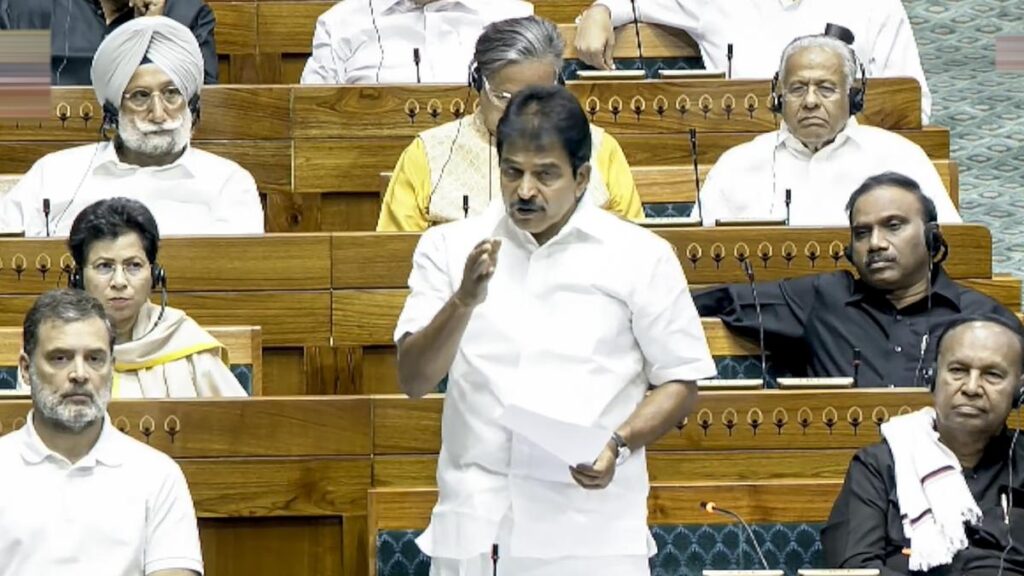
The reason is simple: this proposal can change the size of Lok Sabha, redraw constituencies, reserve seats for women, and reshape political power among states.
If you want to understand what is happening in simple words, this guide explains everything.
Table of Contents
What Is Delimitation in India?
Delimitation means redrawing the boundaries of election constituencies so that representation matches population changes.
It decides:
- How many seats each state gets in Lok Sabha
- How constituency borders are drawn
- Which seats are reserved for SC/ST categories
- How future women reservation seats may be arranged
India has done delimitation in the past, but seat redistribution has been frozen for decades to maintain balance among states.
Why Is Delimitation Bill 2026 in News?
On April 16, 2026, the Government introduced three important bills in Parliament:
- Constitution (131st Amendment) Bill, 2026
- Delimitation Bill, 2026
- Union Territories Laws (Amendment) Bill, 2026
These bills aim to implement women’s reservation and prepare for fresh constituency changes.
Biggest Proposal: Lok Sabha May Expand to 850 Seats
The most headline-making proposal is to increase Lok Sabha seats from 543 to 850.
According to reports:
- 815 seats may go to states
- 35 seats may go to Union Territories
This would be one of the biggest structural changes in Indian democracy since independence.
Why Increase Seats?
India’s population has grown massively. Many MPs currently represent extremely large populations. A larger Lok Sabha could mean:
- Smaller constituencies
- Better local representation
- Easier implementation of reservation quotas
- More MPs from growing regions
Women’s Reservation Linked to Delimitation
The Nari Shakti Vandan Adhiniyam (2023) promised 33% reservation for women in Lok Sabha and state assemblies. But implementation was linked to future census and delimitation.
Now the new 2026 bills aim to move that process forward before the 2029 General Election, according to multiple reports.
That means India could soon see a historic rise in women MPs.
Why Opposition Parties Are Angry
Many opposition parties support women’s reservation, but question why it is linked with delimitation now.
Main concerns raised:
1. Political Timing
Some leaders asked why the government brought delimitation and women quota together in one session.
2. North vs South Seat Balance
Southern states like Tamil Nadu, Kerala and others fear that states which controlled population growth may lose relative influence if seats are redistributed mainly by population.
3. Federal Balance
Critics say any major seat change must protect smaller and better-performing states.
4. Census Questions
Experts noted the new law may allow Parliament to decide which census data is used for delimitation. Reports suggest the latest published census available when the commission is formed could be used.
Why Supporters Call It Historic
Supporters argue this reform is overdue.
They say:
- India needs more MPs for a huge population
- Women deserve fair representation now
- Old constituency maps no longer reflect reality
- Democracy must modernize with population shifts
Prime Minister Narendra Modi said half the country’s population should be part of decision-making.
What It Means for Different States
Northern States May Gain More Seats
States with larger population growth such as:
- Uttar Pradesh
- Bihar
- Rajasthan
could gain stronger representation if allocation follows population.
Southern States Fear Relative Loss
States such as:
- Tamil Nadu
- Karnataka
- Kerala
may not lose seats numerically if the House expands, but may lose relative share in Parliament.
Northeast States Watch Carefully
States like Assam and the Northeast are highly sensitive to delimitation because of:
- tribal representation
- border demographics
- migration concerns
- ethnic political balance
What About Assam?
For Assam, delimitation is always a major topic.
Possible impact areas:
- Reserved constituency changes
- Community balance in seats
- Urban vs rural constituency redraw
- Political equations in Barak Valley, Lower Assam, Upper Assam and Guwahati region
Any national delimitation move will be closely watched in Assam.
Will This Bill Pass?
Because constitutional amendments need special majorities and often state approval, passing everything smoothly may not be easy.
Reports show heated debate already happened in Parliament with strong arguments from both sides.
So while momentum exists, final implementation depends on voting numbers and political consensus.
FAQ
What is Delimitation Bill 2026?
A proposed law to redraw constituencies and support implementation of women’s reservation.
How many Lok Sabha seats after Delimitation Bill?
Reports indicate a proposed increase to 850 seats.
Will South India lose seats?
Not necessarily absolute seats, but some states fear reduced share of power.
When will women reservation start?
The aim discussed is implementation before or from the 2029 election cycle.
Final Analysis
The Delimitation Bill 2026 is much bigger than a normal law. It can reshape Indian politics for decades.
It is about:
- representation
- women’s empowerment
- state power balance
- future elections
- parliamentary modernization
Some see it as democratic reform. Others see it as political redesign.
One thing is certain: if passed, India’s electoral map may never look the same again.
Conclusion
The debate around delimitation has only begun. Whether you support or oppose it, this is one of the most important political developments in modern India. Every voter should understand what it means, because it can directly affect who represents your state, your city, and your future.
